
Martin Fotta, Ingrid Vagačová (eds): Rómovia a druhá svetová vojna. Čítanka (The Roma and World War II. A Reader)
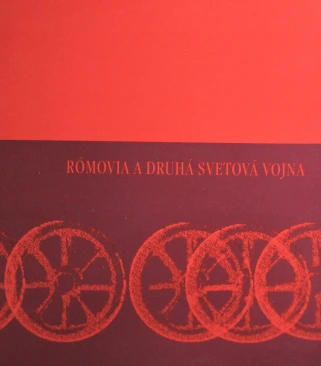
Milan Šimečka Foundation, Bratislava 2006
The fate of the Roma in Slovakia during World War II is presented in a mosaic of specialist texts and testimonies of Romani Holocaust survivors. The part of the book entitled “At the Beginning” contains six texts by the editors in which they present existing knowledge about the persecution of Roma under Nazism in Slovakia, as well as the Milan Šimečka Foundation project “Oral History: the Fate of Those Who Survived the Holocaust”, which produced recordings of the recollections of fifteen Romani survivors (seven of them published in the book). The editors also describe how the texts for the publication were composed and how they dealt with the use of the terms Rom/Cigán/cigán. As they did not manage to include an overview of the situation in wartime Hungary, there is a chapter devoted to this region — relevant to the fate of Jews and Roma in southern Slovakia. The seventh introductory text, written by Lucia Segľová and Zuzana Bošeľová, introduces the Milan Šimečka Foundation project entitled “Roma Work Units: a Forgotten Part of the History of World War II in Slovakia”, in the context of which the book was published, as well as the contents of the accompanying educational DVD.
The most comprehensive part of the book consists of nine historiographical texts about the wartime fate of Roma in Slovakia by Ctibor Nečas (“The persecution of Gypsies in the period of the Slovak State. Work units of what were called a‑socials and Gypsies in East Slovakia in 1942”; “Forced labour in concentration camps for Gypsies in Dubnica nad Váhom”); Karol Janas (“Work units for Gypsies and a‑socials in Iľava in 1943”; “Attempts by the Slovak government to end trading in refuse in 1939−1944”; “Attempts by the Slovak government to end horse trading in 1939 – 1941”); Arne B. Mann (“The position of the Roma in Slovakia during World War II”); Ivan Kamenka (“The Holocaust in Slovakia — Comparison of the fates of the Roma and the Jewish populations”); and Milena Hübschmannová (“Is there really so much suffering? Reflections on Slovak Roma memories of World War II”). The header of each article indicates what the article is about and its source; a short profile of the author is also included. The texts are in the language of the original publication, i.e. Czech (Hübschmannová, Nečas) and Slovak (Janas, Kamenec, Mann).
Three Romani songs with war themes are followed by a passage devoted to the testimonies of Roma. Eight testimonies are taken from previously published sources: Jana Kramářová et al: (Né)Bolí: Vzpomínky Romů na válku a život po válce (It does [not] hurt. Roma memories of the war and life after the war); Vasil Fedič: Východoslovenskí Rómovia a II. Svetová vojna (The Roma of Eastern Slovakia and World War II.).Eyewitness testimonies: Co mi doma vyprávěli. Rodinné příběhy Romů z druhé světové války vyprávěné romskými dětmi (What they told me at home. Family stories of Roma from World War II told by Roma children); Spomienky Jána Rigu z Podunajských Biskupíc na druhú svetovú vojnu (Ján Rigu of Podunajské Biskupice recalls World War II” (Romano džaniben 1−3÷1994); Milena Hübschmannová et al. Osudy slovenských Rómov v 2. svetovej vojne (Destinies of Slovak Roma in World War II). (Romano lil nevo no. 67 and 70−71÷1992). Seven of the testimonies come from previously unpublished interviews from the Milan Šimečka Foundation archives. The section concludes with a chapter on the war from Elena Lacková’s autobiography Narodila jsem se pod šťastnou hvězdou (Born under a lucky star), prepared in collaboration with Milena Hübschmannová.
The book concludes with a text by the Polish sociologist Sławomir Kapralski, “Why teach about the Roma Holocaust?”, acknowledgements by the editors, a pictorial appendix, a recommended bibliography, and a summary in English.
The book is published in Slovak-Romani and Czech-Romani versions; all the texts, except for the historiographical essays to which the editors have added only summaries in Romani, are translated into Romani. The book includes a DVD with excerpts from witnesses’ testimonies, which — with two exceptions — are not quoted in the text.
The reminiscences from the Milan Šimečka Foundation archive were recorded in various locations in Slovakia in the late 1990s. The video interviews were created as part of the Milan Šimečka Foundation’s Oral History Project.
The interviews were conducted in the homes of the narrators in Slovak, Hungarian or Romani and were recorded on video. The specific dates and circumstances of the individual interviews are not given.


